
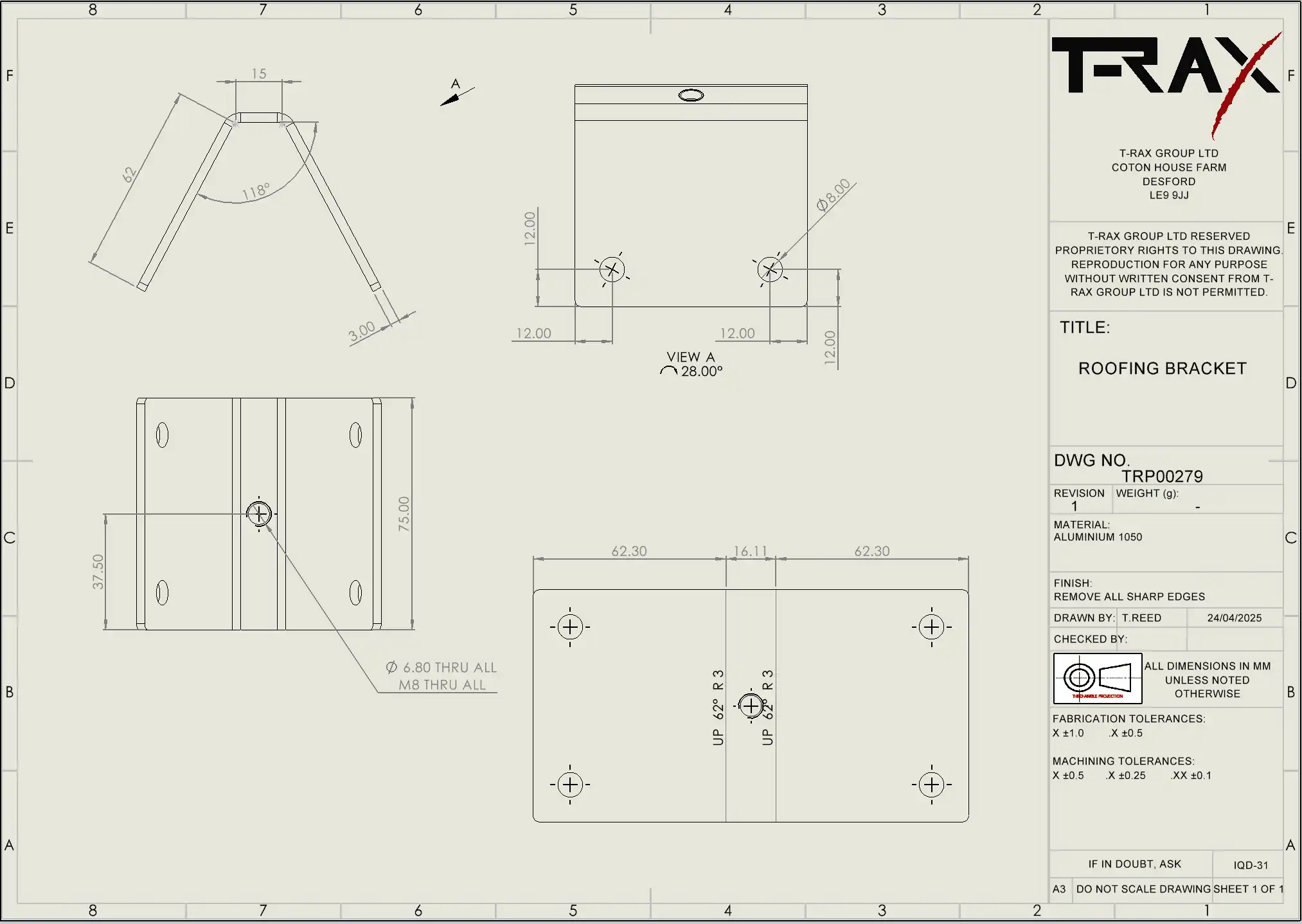
How the Manufacturing Process Works
A clear route from your first enquiry to an agreed manufacturing plan and finished metalwork.
Every project is different. These stages explain the decisions and information that help keep fabrication moving.
1. Tell us what you need
Send your drawings or concept, the application, material, quantity, finish and target delivery date. Include your delivery location and highlight critical dimensions or parts that must fit together. If you do not yet have production drawings, explain the problem you are trying to solve.
2. Review the design and scope
We review the information and discuss the manufacturing requirements. This is the stage to resolve questions about material, tolerances, bend geometry, welded joints, assembly access and finish. CAD design or design-for-manufacture support can be included where required.
3. Agree the quotation and specification
The quotation should identify the work being supplied, quantity, finish, delivery arrangements and any assumptions. Agree the drawing revision, acceptance criteria, required documentation and responsibilities for supplied components. Lead time is confirmed around the actual scope and production availability.
4. Approve the design or sample
Where the project requires a prototype, first-off sample or drawing approval, agree that stage before batch production. Check fit, function and appearance against the intended use. Any changes should be recorded in the approved manufacturing information.
5. Manufacture the components
The production route may include laser cutting, folding and welding. The sequence depends on the material, geometry and final assembly. Design changes during manufacture need review because they can affect work already completed.
6. Finish and assemble
Apply the agreed finishing and assembly stages. Powder coating, galvanising, fixings and bought-in components should be specified with the final use in mind. Identify surfaces that need protection, masking or a particular appearance before this stage.
7. Check against the agreed requirements
Inspection should address the dimensions, fit and finish identified in the specification. Tell us at quotation stage if you need material records, inspection reports, testing or a formal customer approval point so these can be included in the scope.
8. Pack, hand over and plan repeat orders
Agree how finished parts will be protected and whether they will be collected or delivered. For future orders, keep the approved drawing revision and advise us of any changes to quantity, finish or application.
What helps a project run smoothly?
- One current set of drawings and a named contact for technical questions.
- Critical requirements identified before quotation.
- Prompt approval of drawings, samples and proposed changes.
- Realistic information about quantities and required dates.
- A clear packing, collection or delivery plan.